Construction Monitoringfor lenders who carry the risk.
Independent monitoring and cost advisory for lenders, banks and funds, appointed by the lender, answerable to the lender.
We validate the budget before you commit, certify every drawdown while you are exposed, and confirm residual risk before the final tranche is released. Each report is produced from the same live project data your borrower works in, not reconciled from it.
Project clock — indicators on a live mandate
Indicators are defined by the mandating bank. Values shown are illustrative.
Euro construction volume monitored
Projects delivered since 2014
Locations, Munich to New York
Developers, managers and financiers
An independent monitor.Not a software vendor with a services arm.
PROBIS is an independent construction monitoring and cost advisory firm. We have run monitoring mandates for banks, institutional investors and developers across Europe, the UK and the United States for more than a decade — and we built our own financial management platform because the spreadsheets and PDFs we inherited were the problem.
That combination is the point. The benchmark database behind every budget assessment comes from projects we have monitored ourselves, not licensed data. Before we accept an instruction we review the lender’s standard scope of service and check for conflicts of interest with the borrower’s team.
Miss it early,pay for it later.
Real estate lending is structurally fragmented. A single development can involve 20 to 100 parties and generate up to 1,200 documents, which is where cost overruns hide until they are too expensive to unwind.
Without a monitor on live data
Problems surface too late
Disconnected tools create blind spots. By the time a deviation reaches the credit file it has already been priced in.
- Status reporting lags behind the site by weeks
- Oversight scattered across Excel, email and PDFs
- Budget deviations caught only after they have grown
- No single source of truth between lender and borrower
- Local market pricing is assumed rather than verified
Every reconciliation step between systems is a place where a number can quietly change.
With PROBIS monitoring
One platform, full visibility
Budgets, commitments, invoices and progress live in one workflow. The monthly report is a view of that data, not a re-keyed summary of it.
- Budgets, progress and cash flow held in one place
- Cost and schedule risks flagged against thresholds you set
- Lender-ready reports produced on demand
- One dashboard for a single asset or a full portfolio
- Budget assumptions tested against comparable built projects
Funds are released only against work verified as complete.
Three phases,from term sheet to handover.
The scope is set by your standard terms of service. What follows is the shape most mandates take.
One-off
Initial reporting
Clarify the requirements and complexities of the scheme, and establish whether it is deliverable on the proposed budget and programme.
- Review the lender’s standard scope of service
- Check for conflicts of interest with the borrower’s team
- Independently validate the proposed budget against comparable projects
- Identify the key cost drivers and the assumptions carrying the most risk
Typically monthly
Construction phase
Ongoing monitoring while the facility is drawn, so that each release is backed by verified progress rather than a contractor’s assertion.
- Review contractor reports and walk the site to verify progress
- Photograph the status of works as a dated record
- Certify drawdowns from valuations
- Track conditions precedent and flag breaches as they arise
- Issue progress reports tracking cost-to-complete against budget
One-off, with triggers
Final reporting
Confirm final status, quantify residual risk and establish handover readiness before the last tranche is released.
- Reconcile final account against the sanctioned budget
- Summarise completion status, outturn cost and residual risks
- Record outstanding items and where liability for them sits
Four things we watch,continuously.
Financial control
Budgets, commitments, forecast cost, invoice allocation and payment status held in one system so the committed position is never a guess.
Progress tracking
Planned against actual progress, verified on site. Milestone trend analysis shows not just that a date slipped, but where the slippage started.
Risk monitoring
Critical deviations detected early, with transparent alerts against thresholds you define and a clear action point attached to each one.
Portfolio monitoring
One asset or an entire book, held to the same standard. Cross-project comparison works because the cost structure underneath is standardised.
The indicators behindevery drawdown decision.
Each indicator answers one question about the same total budget, which is what makes them comparable across a portfolio. Your credit team defines which ones apply and where the thresholds sit.
Payment status
The share of the total budget already paid out in cash, read against the progress of construction. Has money left the facility faster than the building has gone up?
Construction status
Progress measured against the total budget rather than the programme. What percentage of the total budget has actually been implemented in completed work?
Procurement status
How much of the total budget has already been awarded under contract. Usually the first indicator to show a cost problem coming.
Design and planning
How far design and planning have progressed. Thin design at a high procurement percentage is a reliable early signal of change orders ahead.
Letting and sales
The percentage of space designated for rent or sale allocated to date — the revenue side of the exposure, on the same reporting cycle as the cost side.
ESG
Real-time scoring of projects and portfolios, plus monitoring of ESG measures committed to in the facility documentation.
Illustrative figures from our benchmark database. On a live mandate these are drawn dynamically from the project record.
Many parties.One record.
Monitoring only works if the monitor, the borrower and the bank are reading the same numbers. Each party sees the view they need, governed by their own permissions.
Data sovereignty
For the client and borrower
- Interfaces to the third-party systems already in use
- Own forecasts maintained alongside the monitored position
- One submission serves every lender in the syndicate
Finance decision
For the bank
- Early risk detection ahead of the credit committee
- Accounting data available in real time
- Disbursement processed through to payment instruction
Financial integrity
For lenders
- Transparency across the whole financing structure
- Expenses monitored as they are incurred
- Conditions precedent tracked continuously, not at month end
Risk mitigation
For investors
- Fund usage controlled in real time
- Benchmarks drawn from comparable monitored projects
- Exposure visible at asset and portfolio level
Management
For the monitor
- Dynamic dashboard reporting
- Data quality enforced by digital process rather than by review
- Site verification recorded against the same cost record
Cost and schedule control,and technical monitoring.
A selection of current and recently completed monitoring mandates across Europe, the UK and the United States.

STURE
Sturekvarteret, Stockholm
Redevelopment of a historic city block around Stureplan into one of Scandinavia’s most significant urban development schemes.

EDGE East Side Tower
Friedrichshain, Berlin
A landmark office tower at Warschauer Brücke, financed by pbb and taken by Amazon as its European headquarters.

Alte Akademie
Central Munich
Conversion of a listed complex in the heart of Munich, with quality, cost-effectiveness and sustainability weighted equally.

DER Bogen
Munich
New-build commercial and office scheme, monitored from first drawdown through to completion.
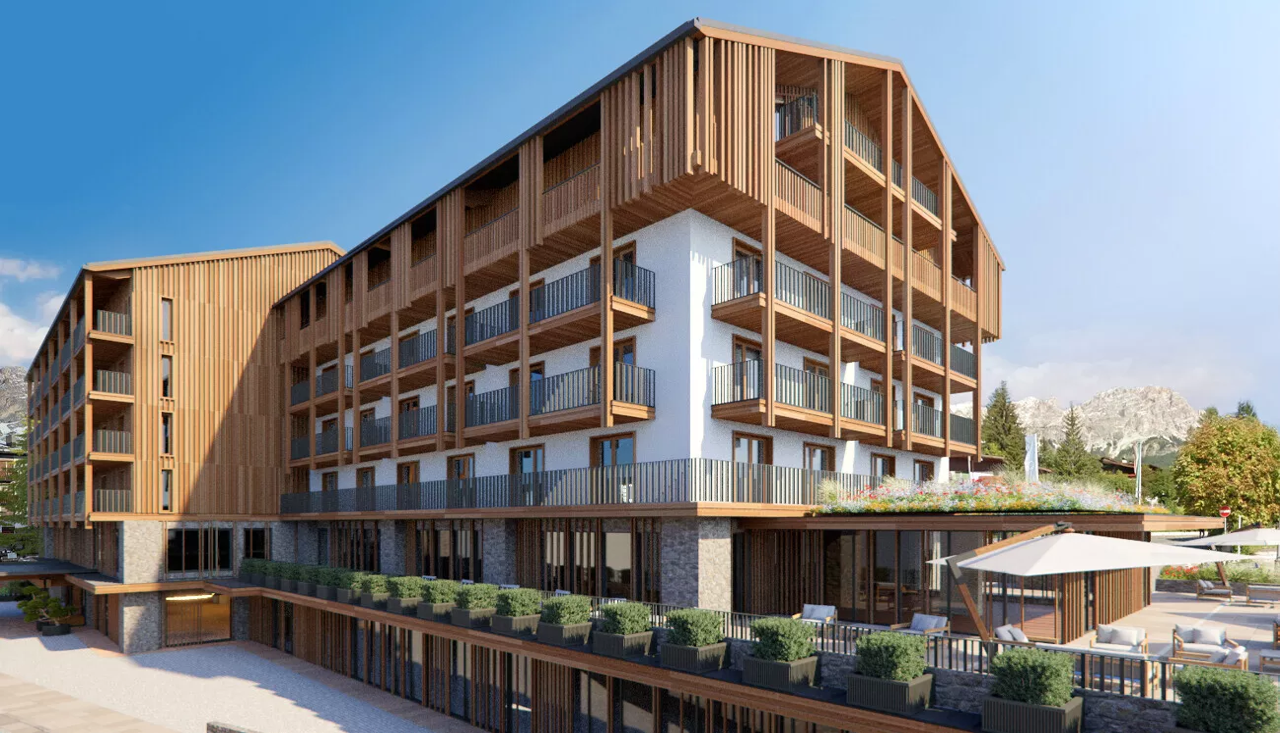
Hotel Bellevue
Cortina d’Ampezzo
New five-star hotel of roughly 80 rooms. Cost and quality controlling plus interface coordination between developer, investor and bank.
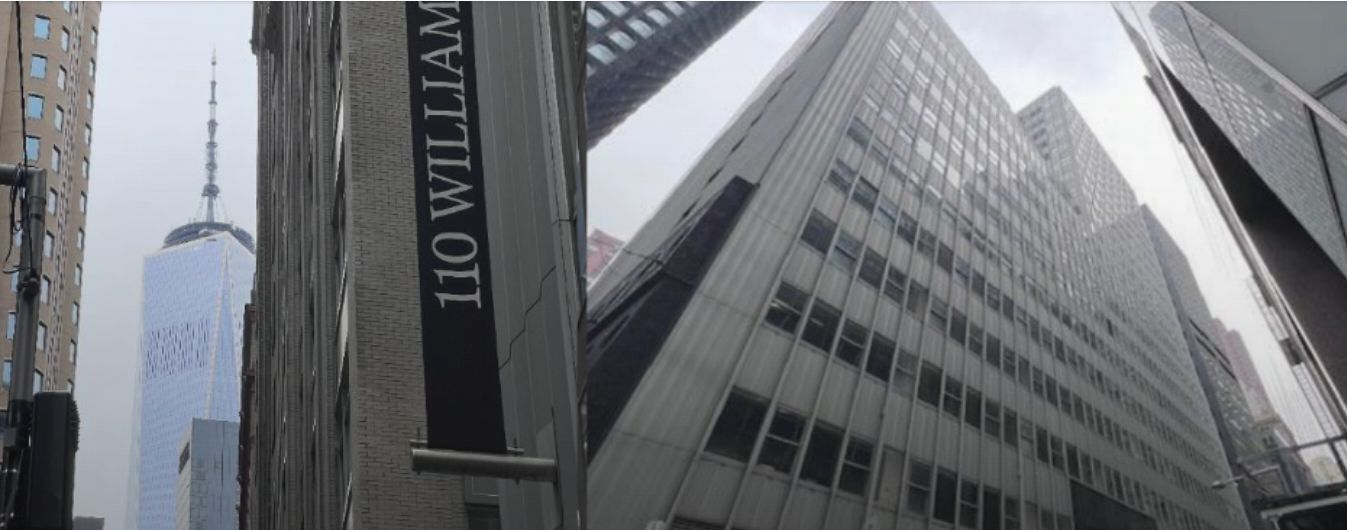
110 William Street
Lower Manhattan, New York
Repositioning of a 32-storey office building — a live-occupancy refurbishment where phasing risk sits alongside cost risk.

City Park
Vienna
New-build commercial and logistics park on a fast programme with a tightly specified building envelope.

Weißes Quartier
Munich
Renovation of an office district delivered in phases, with cost and schedule control throughout.
Who wework for.
Lenders, institutional investors, developers and technical advisors. Together with them we develop the solution modules — and the benchmark data behind every budget assessment.

Deutsche Pfandbriefbank
Specialist real estate lender · Germany
Relies on PROBIS across multiple financings for end-to-end automation, regulatory-compliant data storage and structured reporting.

UniCredit
Pan-European commercial bank
Mandated PROBIS on DER Bogen in Munich for cost and schedule control within the project financing.

Abu Dhabi Investment Authority
Sovereign wealth fund
Monitoring mandate on the redevelopment of the Sturekvarteret in Stockholm.

BayernLB
Landesbank · Germany
Technical monitoring and cost control on the Alte Akademie conversion in central Munich.

nuveen
Institutional asset manager
Monitoring of the City Park commercial and logistics development in Vienna.

Alpha Bank
Commercial bank · Greece
Cost and quality controlling on the five-star Hotel Bellevue in Cortina d’Ampezzo.

Savanna
Investment manager · New York
110 William Street: repositioning a 32-storey office building in Lower Manhattan.

Commerzbank
Commercial bank · Germany
Digital monitoring of cost, schedule and quality against a consistent reporting standard.

BNP Paribas
International banking group
Real estate financing supported by standardised fund utilisation control and lender-ready reporting.

Barings
Global investment manager
Real estate investment supported by portfolio-level oversight and cross-project benchmarking.

AXA Investment Managers
Institutional investor
Development and refurbishment exposure monitored to one standard, with real-time visibility of fund usage.

EDGE Technologies
Developer · sustainable offices
Developer of the East Side Tower in Berlin, delivering heavily instrumented office buildings.

Real estate services & advisory
Project and cost management teams working in PROBIS as the shared record across client mandates.
.png)
Fraport
Airport operator
PROBIS acts as the central interface for project data across the Fraport system on multi-project programmes.
bauwerk
Developer · Munich
Developer of Vinzenz in Munich, working in the same record as the monitoring and financing parties.
Real-time construction monitoring and standardised reporting let us identify and mitigate financial risks before they escalate — the clarity, standards and control we need for effective risk and financial oversight.
Reports thatassemble themselves.
Financial, monitoring and management reports are generated directly from the project record, so tracking conditions precedent is continuous rather than a month-end exercise. The early warning system covers debt and equity utilisation, letting and sales status, contracts, planning stages, construction progress and deadlines.
Configurable one-pager
Widget-based reporting set to your house standard — project key data, status, indicators and the month’s report in a single view.
Multi-project reporting
Portfolio overview on demand, with a transferable standard across schemes and client-specific cost databases behind it.
Early warning system
Threshold breaches surface as alerts with the variance, the trend and the affected cost group attached — not as a line in an appendix.
Export and integration
Import and export across your management systems through a REST API, so monitoring output lands in the systems your teams already use.
Where the monitoring feepays for itself.
Reduction in financing defaults across monitored facilities
Less time spent assembling reporting for each stakeholder
Improvement in IRR through earlier intervention on deviations
Who you willactually be dealing with.
Mohamed Gomaa
Consultant, Civil Engineer
Ahmed Elgammal
Consultant, Civil Engineer
Send us the schemeand the term sheet.
We will come back with an independent read on the budget, the cost drivers that carry the most risk, and what a monitoring scope would look like for this facility.